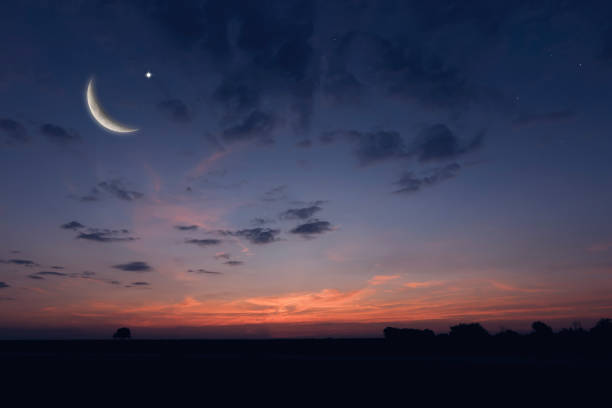
As the holy month of Ramadan draws to a close, authorities in Oman have announced plans to observe the Shawwal crescent moon on Thursday evening, a crucial step in determining the exact date of Eid Al Fitr 2026.
The Main Committee for Moon Sighting in Oman is scheduled to convene to monitor the skies for the appearance of the crescent, which signals the beginning of Shawwal the tenth month of the Islamic calendar. The sighting of this moon officially marks the end of Ramadan and the start of Eid Al Fitr celebrations.
Public Urged to Participate in Moon Sighting
Authorities have called upon citizens and residents across the country to actively participate in the moon-sighting process. Individuals who spot the crescent are encouraged to report their observations to the relevant committees, reinforcing a long-standing Islamic tradition that relies on physical moon sightings rather than solely astronomical calculations.
This communal involvement highlights the spiritual and cultural significance of the event, as Muslims collectively anticipate the conclusion of a month dedicated to fasting, prayer, and reflection.
Eid Date Depends on Crescent Visibility
The timing of Eid Al Fitr in Oman will depend entirely on whether the crescent moon is sighted. If the Shawwal crescent is visible on Thursday evening, Eid will be celebrated the following day. However, if the moon is not sighted, Ramadan will complete 30 days, and Eid will be observed a day later.
This method aligns with the broader Islamic practice observed worldwide, where the lunar calendar determines key religious dates. Variations in moon sightings often lead to differences in Eid celebrations across countries.
Oman is among several countries that are conducting moon sightings at slightly different times this year. While some nations began their observations earlier in the week, others including Oman have scheduled theirs a day later due to lunar visibility conditions.
Across the Muslim world, the sighting of the crescent moon remains a deeply rooted tradition that unites communities in anticipation of Eid. Despite advancements in astronomical predictions, many countries continue to rely on physical observation to confirm the start of Shawwal.
Significance of Eid Al Fitr
Eid Al Fitr, often referred to as the “Festival of Breaking the Fast,” is one of the most important celebrations in Islam. It marks the end of Ramadan, a month characterized by fasting from dawn to sunset, increased devotion, and acts of charity.
The festival is typically observed with special prayers, family gatherings, festive meals, and the giving of Zakat al-Fitr a form of charity intended to ensure that all members of the community can partake in the celebrations.
As Thursday evening approaches, anticipation continues to grow in Oman and beyond. The final confirmation of the crescent sighting will not only determine the end of Ramadan but also usher in a time of joy, gratitude, and communal celebration for millions of Muslims.