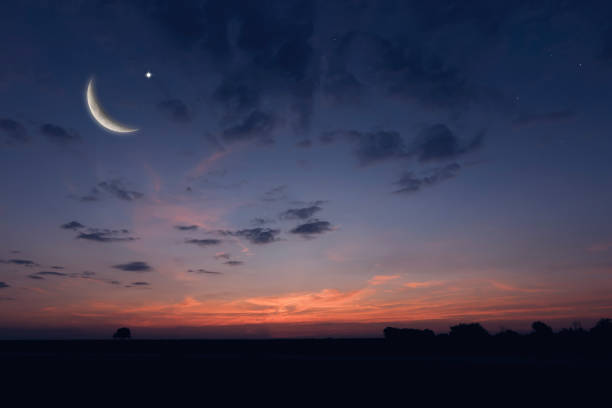
For more than a billion Muslims around the world, the sighting of the crescent moon is more than an astronomical event it is a spiritual signal that shapes worship, community life, and the rhythm of the year. The Islamic calendar, known as the Hijri calendar, is rooted in the lunar cycle, making the moon central to the daily and seasonal practices of Islam.
Unlike the Gregorian calendar, which follows the solar year, the Islamic calendar is based entirely on the phases of the moon. Each month begins with the physical sighting of the new crescent moon shortly after sunset. Because a lunar month lasts 29 or 30 days, the Islamic year is about 10 to 12 days shorter than the solar year. As a result, Islamic months gradually shift through the seasons over time.
The calendar itself begins with the Hijra the migration of the Prophet Muhammad from Mecca to Medina in 622 CE. This historic journey marked the formation of the first Muslim community and became the starting point of the Islamic era.
One of the most significant months determined by the crescent moon is Ramadan. The beginning of Ramadan is announced when the new moon is sighted, signaling the start of a month of fasting, prayer, charity, and reflection. Muslims fast from dawn to sunset each day, breaking their fast at sunset with the iftar meal. The end of Ramadan is also determined by moon sighting, leading to the celebration of Eid al-Fitr.
Moon sighting is not simply a scientific calculation; it is a communal and spiritual practice. In many countries, religious authorities gather testimony from witnesses who report seeing the crescent. Some nations rely on astronomical calculations to predict visibility, while others insist on physical sighting. These differences can sometimes lead to variations in the start and end of Ramadan across regions.
Despite these differences, the communal anticipation of “Has the moon been sighted yet?” and the shared devotion it symbolizes are unifying elements in Muslim life. Even when calendars differ by a day or two, the spirit of Ramadan renewal, devotion, and compassion remains the same.
Ramadan culminates in the festival of Eid al-Fitr, which also depends on the sighting of the crescent this time of the new moon marking the start of Shawwal, the month after Ramadan. Once that moon is sighted shortly after sunset on the 29th day of Ramadan, Muslims celebrate Eid with special prayers, feasting, charity, and community gatherings.
Across cultures from the lively Chaand Raat festivities in South Asia on the eve of Eid to quiet, reflective prayers in other communities Eid al-Fitr reinforces both individual spiritual growth and collective joy.
The tradition of moon sighting in Islam is deeply spiritual, symbolic, and practical. It reflects a worldview in which time is not simply an abstract measurement but one deeply intertwined with creation and religious life. The appearance of the crescent moon marks not just the passing of days but a journey of reflection, discipline, and renewal that culminates in one of Islam’s most joyous celebrations.